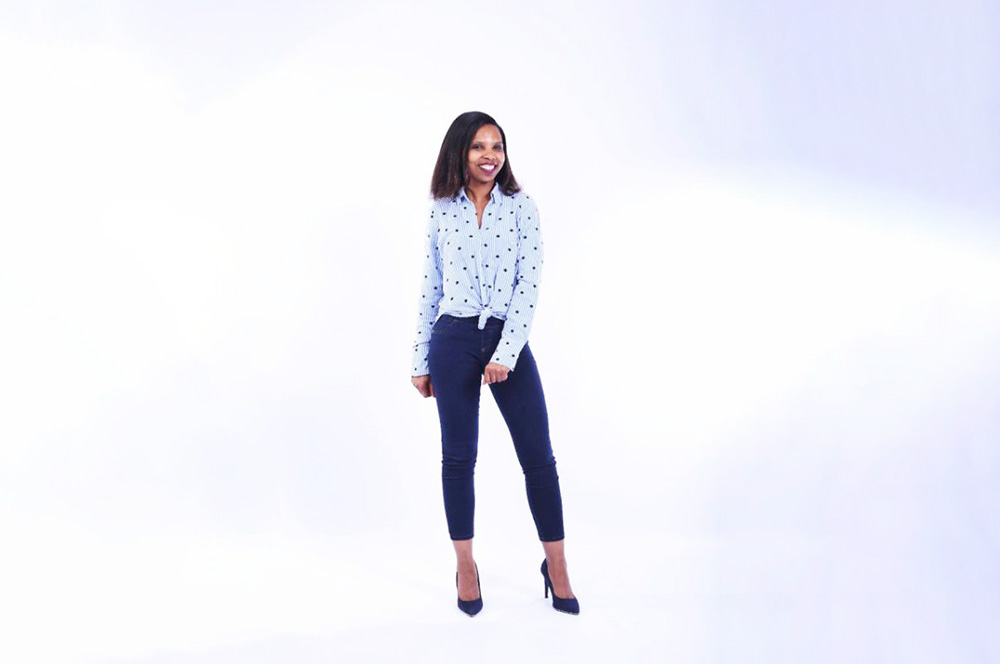
Sinovuyo Ndudane is part of the Sport News Coordination and Research Team at SABC Sport for Radio and TV. With 5 years in the bag, it all started with her laying her hands on KickOff Magazine, Soccer Laduma newspapers and listening to the sports show on Umhlobo Wenene.
All those birthed an ambassador of the women’s game. Through her work, Ndudane continues to find ways to advance women’s sport through media coverage.
With Banyana Banyana having won the Women’s Africa Cup of Nations in Morocco in July 2022, Ndudane waits with bated breath to see if that will rightfully narrow the gender pay gap, the visibility gap and earn professional contracts for more women sports athletes and administrators.
While she acknowledges the small steps, she does note that sport is still a very much male dominated sector.
Not to be deterred though, Ndudane dreams to one day become one of the top sport researchers in the country. She had a sit down with Lonwabo Nkohla to unpack her journey thus far.
Sinovuyo thank you for chatting to us at gsport. Tell us where your story with sport began?
My love for sport started way back, I was in my teens when I would visit my close relative in another village. Their first son, my cousin Phumzile Manciya who was doing his first year at Varsity then, had a lot of Kick Off Magazines and Soccer Laduma newspapers. When I’m saying a lot I mean a lot – so being bored as a teenager in a village with no electricity (by the way that village is still without electricity) and TV, we would end up going through the magazines and newspapers. I then fell in love with sport.
My first favourite sport person was Jabu Pule and Noko Matlou. I started to listen to Ezemidlalo on uMhlobo wenene FM in 2004, which opened my curiosity to other sporting codes. I then developed love for multiple players – Jimmy Tau, Vuyo Mere, Surprise Moriri, and Portia Modise. The same year we got a TV at home for the first time, that’s when I also fell in love with the likes of Serena Williams, not that I knew much about tennis, I was attracted by her dominance in tennis.
Growing up there was always this unsaid conclusion that sport was for boys, what made you believe that this is a field that you too can go into?
As much as I knew that I had nothing to do with presenting, I admired and looked up to Carol Tshabalala and Cynthia Chaka. Seeing them on SABC 1 owning their platform as if they were born in front of cameras convinced me that I too have a role somewhere in the world of sport.
You studied Sport Management at the Vaal University of Technology, how has that aided your career in media?
I knew where I wanted to land career-wise. In my second year I worked as a sport reporter at VUT FM, I started to write sport articles and presented on-air on the station. I boosted my Sport Management with a Journalism certificate from UNISA. The combination of the three helped me to find a space in the big media house.
What have been some of the struggles in your career – struggles that your male counterparts may not experience?
I must say though that women in sport are respected, maybe it has to do with the times. However, there is always that little shadow of being doubted as a woman, to this day I still experience that. And my biggest challenge is to find comfort in a space where I have to constantly prove myself.
We recently saw Banyana Banyana grab and hog the headlines for the first time in women in sport history. Do you think their win in Morocco will change the way we report about women’s sport?
Honestly you’ve touched my worst fear, especially in a country like ours, where women sport is still treated differently compared to male sport. You know exciting vibes come and go but I sincerely hope that this historical moment will remain a constant reminder that the girls are out there doing absolutely amazing, I hope that can inspire us to report more on women’s sport.
Talk to us about the importance of media coverage for women in sport.
Besides the fact that they are well deserving, they do not get the attention and respect they deserve unless they win something big and this is the reason why it is so important for publication to direct the attention to their side to let them know that they are seen and they matter in this nation building. I want to also inspire young girls, while shining the spotlight on woman’s sport.
With your work at the Public Broadcaster, can you give us a sneak peak of your creative process, i.e. picking out which content you’ll write about?
I am part of the Sport News Coordination and research team for both Radio and TV. In Coordination we receive soundbites and scripts from the reporters and work on their quality, then send everything to all SABC radio stations. In research – here we deal with Stats, we compile research pack for SABC Sport commentators, analysts and presenters as per what SABC TV and radio station will be broadcasting. We covered Women Africa Cup of Nations and some big projects to research for – we will be looking at the Rugby sevens and FIFA World Cup.
This women’s month, what would you like to see change for women’s sport?
There have been a lot of promises that women’s football will be paid same as men’s, I mean we heard that and it’s been a while now. I would really love to see that happening and also to see more sponsors on board. I would just love to see women’s sport in general treated decently financial wise and given publicity.
What are some of the highlights of your career?
Look, working for the SABC on its own has been a highlight of my career. Also working for uMhlobo wenene as a producer alongside the late legend Loyiso Sitsheke. If you know uMhlobo wenene or you are from the Eastern Cape you know how much of a big deal that is.
If you were to author a book by one woman in sport, who would it be and why?
Definitely Caster Simenya, will probably title around these lines: “A Beautiful Career Dashed Short”. We have seen it happening in front of our eyes. I would definitely write about Caster’s career sadly dashed when she was on her peak.
We also recently saw a similar incident during the 2022 WAFCON where Barba Banda of Zambia was side-lined from the game. I’m not ignoring the scientific findings at all, I have a different view.
Talk to us about the importance of writing more about marginalized groups, like women.
The main thing that I really believe is that all these marginalized sport-women need is publicity and writing about them will serve that purpose and attract more supporters their direction as well as sponsors, I think. I strongly believe that the way women’s sport is being viewed can change immensely just by one article a time. Women deliver good quality and very exciting games.
What is the big dream for Sinovuyo?
I’m still a baby in here. This is my fifth year in the field and I must say it’s big and exciting. I have been exposed to reporting, producing, research, and sport news desk coordinating – that’s the beauty of the industry, it doesn’t cage you, it opens you up to many chances of growth.
Right now my biggest dream is to be one of the best sport researchers, perhaps extend it to digital platform. That is something challenging yet very interesting in there.
Photo 1 Caption: Sinovuyo Ndudane, who is part of the Sport News Coordination and Research Team at SABC Sport for Radio and TV, is on a mission to advance women’s sport through media coverage. Photo: Supplied

 (0 rating, 0 votes, rated)
 Loading...