
When Shona Hendricks had the option of choosing between Sport Psychology and Sport Science, she chose Sport Science and has never looked back. Following her graduation from the University of the Witwatersrand, unforeseen circumstances lead to her doing her Honours degree, at the University of Pretoria.
She began her career at the Institute for Sports Research at the High-Performance Centre, where she was the lead strength and conditioning specialist, for the SAFA Girls/ Basetsana U20/U17 National Ladies Football Academy.
After 7 years of being at the Institution, Hendricks was named as the Head of Sport Science at the High-Performance Centre, before she handed in her resignation in August 2020, after 8 years at the helm.
Speaking to Oarabile Diphoko, Hendricks takes us through the journey into her career path, the incredible athletes she has worked with and what she looks forward to the most, in the Year of Women’s Sport.
Tell us a little bit about who Shona Hendricks is?
I am an extremely proud South African. I am fun and outgoing and I LOVE to laugh. I’d like to think that I am kind and consider how my actions have consequence on other people. I am someone who is passionate about all things sport, including development, women in sport, high performance, health and wellness
I believe that travel enriches your life and one of my main goals in life is to run as many marathons in as many different cities around the world as I can. I am overly protective of my people, the people I hold closest to me.
How did you get into the Sport Science field?
It’s not as much of a glamorous story as you’d like to think. I knew I wanted to do something in sport. I have always loved sport and played a lot of sport so when it came to studying, I knew I wanted to do something in sport. I was perhaps naïve and only applied to one university because I had my heart set on Wits. Once I had got into Wits, at registration, I had to make a choice between Sport Psychology and Sport Science and so I chose sport science. I’ve never looked back! I had applied to Wits for my honours degree and due to unforeseen circumstances, our course was cancelled a month before it was supposed to start. And so I was placed at Tuks, graciously accepted late by the late Prof Kruger. And little did I know that this would set my career off as Tuks was where the Womens Football National Academy was based (Football is my first love!)
In 2013, you completed your MBA in Sport Management with Universidad Europea de Madrid. What was the main reason for your continued studies overseas?
Again, extremely lucky here. I had worked hard, working at the high performance centre at Tuks; I had been there for 5 years and so in a medium senior position. The Embassy of South Africa in Spain approached the University of Pretoria and had requested if they had someone who they wanted to grow into a sports management position as they had a bursary for this degree in Spain. The MBA was linked with Real Madrid football club and so because of my involvement with Banyana Banyana and all other football, Tuks approached me and asked me if I wanted to go further my studies in Madrid and of course the answer was “yes, my bags are packed!”
I was lucky to be accepted to Tuks where I worked hard to get involved with the Womens National Academy, and then later with Banyana Banyana. I also worked really hard to become my manager’s (Head of sport science at the time – Lindsey Parry) 2IC and so when the MBA opportunity arrived, while I believe I was extremely lucky, I did have to have a friend also remind me that I had worked very hard for 6 years to have that luck happen (The Gary Player quote of “the harder I work the luckier I get” comes to mind).
In 2014 you became the Head of Sport Science at the Sport Exercise Medicine and Lifestyle Institute at the University of Pretoria. What has that journey been like for you so far?
Ah it was everything I could’ve wanted and more. As I mentioned above I think I found myself in the right place at the right time very often. But I also worked really hard to find myself in these positions. It wasn’t always easy and there were many challenges along the way, both as a junior sport scientist and as a junior female sport scientist. I also had phenomenal support around me (and I mean this in the terms of colleagues who pushed me and we pushed each other to constantly be better) that I am absolutely convinced, without it, I would not have been able to achieve what we did as a team.
Either way because of feeling luck as well as having the right people in the right places in my team; I have also always felt a responsibility to ensure that the next generation coming through can have similar chances.
Leading that team of sport scientists at HPC/ SEMLI for 8 years is one of my highlights of my career. But again, I wasn’t alone in that venture and had an amazing team of senior sport scientists to support me. Kirsty Elliot is one of these and her grace and drive has always been astounding to me. Helen Bayne and I also managed to build a solid friendship/relationship where we were constantly striving for the best. I am a firm believer that you are only as good as the team around you, so be sure to surround yourself with those people.
By the time I left SEMLI / HPC in 2020 and joined CoachParry (Lindsey Parry) full time, I knew my time on leading that sport science unit was done and it was time for someone else to take it and grow some amazing young sport scientists and athletes. I needed something new as a challenge and I think the SEMLI sport science department needed new blood as a leader too.
I see that education is an essential part of our life as you are also a published author in the South African Journal of Sports Medicine. Are there plans for more published pieces in the future?
I believe that education is vital! But I also believe that surrounding yourself with the right mentors can be even more valuable than that piece of paper at times. Yes we may need the formalities to get to where we want to be but don’t let that be the only goal. I enjoyed working on that published scientific article as I was guided by amazing academics such as Prof Christa Janse van Rensburg and Doc Phatho Zondi, but it also showed me that that academia world is not for me. It’s not my strength and I want to make a difference in other parts of the sporting world.
Apart from your role as head of SEMLI, you also do work some for CoachParry Online training as their Head of Athlete Success and strength and conditioning. What exactly does that role entail?
So this is now my full time role. I was doing part-time work for CoachParry part from 2018, but resigned from the University of Pretoria in August 2020 and went full time with CoachParry. Lindsey Parry, who was my head of sport science until I took over the role from him in 2014, has always been a mentor to me and when he asked me to be part of his team for CoachParry and I jumped at the chance. When I came on full time in 2020 I took over the Business Management of CoachParry, and I am also head of the Female Athlete Program at CP. This entails ensuring our female athletes are training to their specific female physiology. We are not small men and so we should train specifically as females and so my role is to take the latest research in this field and to ensure our female athletes (whether recreational or elite) are training to those principles. I have developed a framework called The “Running through Menopause Training Framework” to help female runners going through peri and post menopause get maximum benefit from their running at this interesting time in their lives.
You have worked with several big names that include Caroline Wostmann: 2015 Comrades & 2Oceans winner as well as Bridgitte Hartley: London 2012 bronze medallist in canoeing. What were your main roles in these positions?
My involvement at the high performance centre as a sport scientist and then as head of sport science afforded me the opportunity to work with some phenomenal athletes. My role as a sport scientist mostly involved either the strength and conditioning and/or monitoring of the athletes. My involvement with the Basetsana Academy and then eventually Banyana Banyana was the start of my journey and I am still extremely proud of the athletes like Robyn Moodely, Kaylin Swart, Thembi Kgatlana etc who were part of the academy and have gone on to do amazing things.
With Bridgette I was fortunate enough to help her with her S&C and monitoring in the lead up to her Bronze medal in 2012 London Olympic Games. I was involved with Caroline from an athlete monitoring perspective while Lindsey Parry was her coach.
I see that staying fit and healthy is a big part of your life, having competed in the 2 Oceans Marathons, amongst other distance events. How do you prepare for these events?
I try my best to stay consistent with running and strength training in. For me falling in love with the process of training is more important than the event itself. I love the feeling of being fit and running marathons and ultra-marathons teaches you things about yourself that I have never been able to learn anywhere else.
I have struggled with mental health / depression over the last few years. And while initially training became a burden when I was struggling, these events have also taught me that I am stronger than I think and can dig myself out of very difficult circumstances.
What are some of the challenges you have faced in your career so far and how did you overcome them?
Initially starting out in sport science, it’s a very male dominated field, so I had to learn to how to hold my own. I think this is true for many women in sport and business in general and hopefully this is improving. But it was a challenge early on. I am lucky now to work for a (male) boss who strives for equality in every sense and has similar values to me.
How to overcome this? As a female in sport be sure to always know that you have a voice, don’t back down. But unfortunately, you do still have to learn to play the game in a very male dominated environment.
Another – As mentioned above I personally struggle with mental health. This is a very personal journey but a common theme for me in management in sport and in my own mental health is to have excellent people by your side.
Who are some of the women in sport personalities that you look up too?
There may be a few too many too mention. So many phenomenal women doing amazing things in sport!
Colleagues that I’ve worked with and have influenced my world-
Dr Phatho Zondi, Helen Bayne, Kirsty Elliott, Prof Christa Janse van Rensburg, Mmane Boikyano, Motshidisi Mohono (met her once at a board meeting but the impression on me was massive)
Athletes that I’ve worked with and have influenced my world–
Amanda Dlamini, Caroline Wostmann, Ann Ashworth, Hayley Nixon, Bridgitte Hartley and Thembi Kgatlana
With 2023 being such a big year for Women’s Sport, what are you most looking forward too?
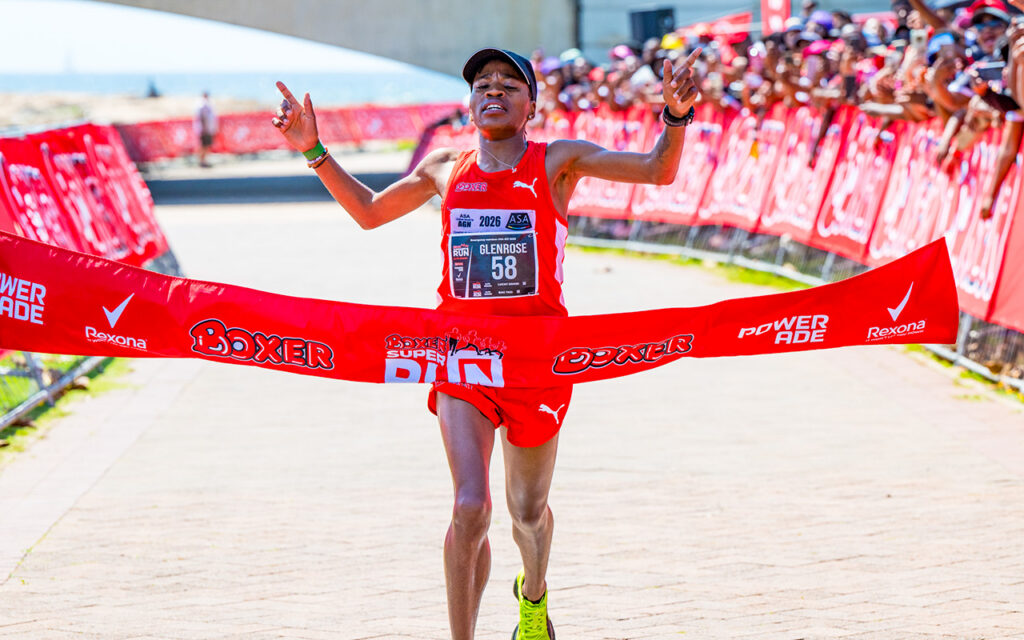
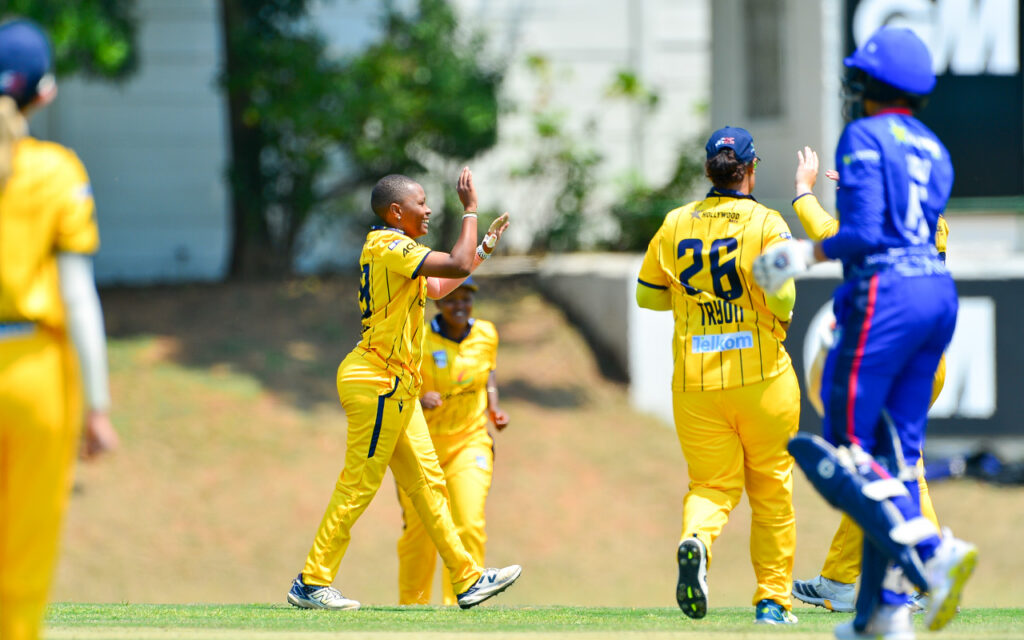
Oooh good question. With football being my first love I’d have to say the Womens Football World Cup. But I also love cricket so I am excited for the Womens T20 World Cup in SA. I guess I just really want to continue seeing women’s sport grow the way it has and continues to. And I would love to see another South African women win the Comrades marathon again this year
My favourite part of my day is very often when my male friends will phone me to comment on how banyana did on the weekend or how the proteas women are doing and the fact that they are reading and interested in these results make me hopeful that we’re finally getting somewhere in the world of women in sport!
Photo 1 Caption:When Shona Hendricks had the option of choosing between Sport Psychology and Sport Science, she chose Sport Science and has never looked back. Following her graduation from the University of the Witwatersrand, unforeseen circumstances lead to her doing her Honours degree, at the University of Pretoria. Photo: Supplied

 (0 rating, 0 votes, rated)
 Loading...