
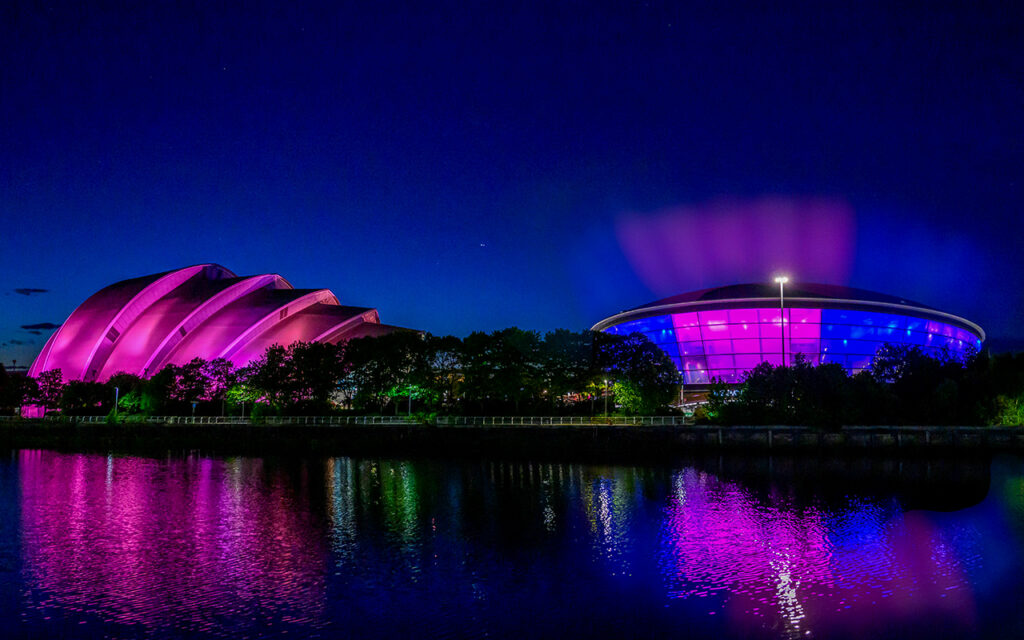
The week the Spar Proteas fly to Nairobi to defend their Africa Netball Cup title, the sport they play will not be short of an audience. That is no longer a hope. Across one winter, women’s sport delivered the numbers that broadcasters, sponsors and governing bodies had been told to wait for, and it delivered them in cricket, hockey and athletics, on three continents, with South African women on the field for every one of them.
Start with cricket.
The ICC Women’s T20 World Cup in England and Wales, played from 12 June to 5 July, became the biggest edition in the competition’s history, with 245,815 fans through the gates over 25 match days, more than 100,000 above the previous record. The final at Lord’s between England and Australia became the highest grossing women’s cricket match ever played, with more than £1 million in ticket sales. On Sky Sports the tournament recorded 15 million viewer hours, the most for any edition since the broadcaster began keeping the data, and the final peaked at 678,000 viewers.
“Women’s sport in South Africa has hit a fandom breakthrough.”
Nielsen Sports South Africa
The Proteas Women were part of that story to the last week. Their campaign ended at the semi-final stage at The Oval on Thursday, 2 July, when England completed a 40-run win built on a record partnership between Nat Sciver-Brunt and Heather Knight, in front of another record attendance. Tazmin Brits’ half-century in the chase, a record chase against India earlier in the tournament and a nerveless qualification at Lord’s stand among the positives South Africa carried home.
Beth Barrett-Wild, the Tournament Director, put the achievement in terms that go beyond turnstiles. Passing 125,000 fans during the group stage was, she said, about “taking women’s cricket firmly into the mainstream and encouraging new audiences”. By then the ICC’s social channels had already passed 753 million video views, a rise of almost 150 percent on the same point of the 2024 tournament, and a single group match between India and Pakistan had reached 134 million viewers on JioHotstar. The value no longer sat in one broadcast slot. It sat everywhere the game could be found.
Hockey asked a different question: not how many are watching, but who. The FIH Hockey World Cup in Belgium and the Netherlands, the first to stage the men’s and women’s tournaments together, generated 106.4 million views across FIH platforms by the end of the second pool phase, with combined reach above 62 million.
Those are combined figures for both tournaments, and FIH does not separate them. What FIH did separate was the source of the traffic: on Instagram, 70.6 percent of views came from people who did not follow the federation at all, and 28,400 new followers arrived across Meta platforms.
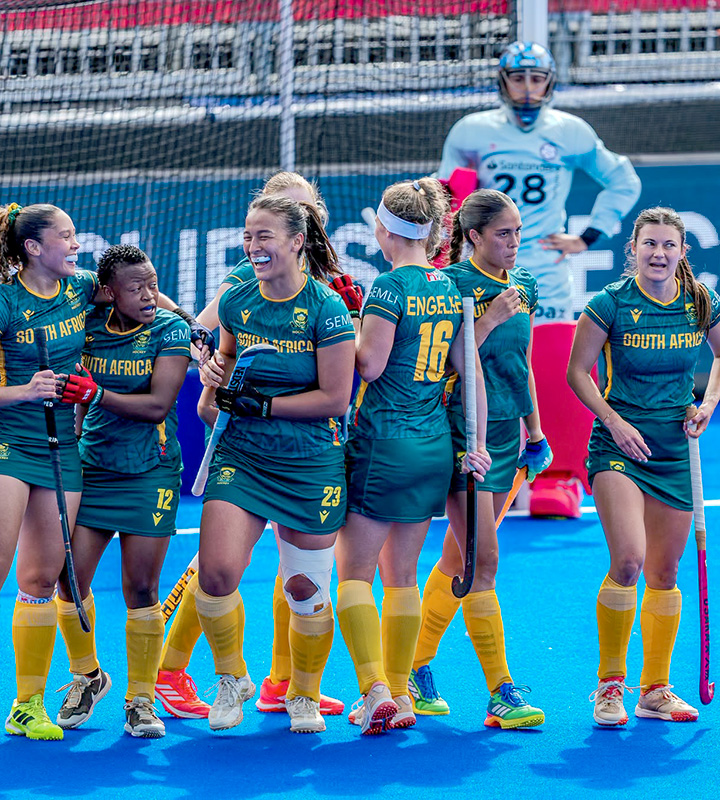
FIH President Tayyab Ikram described the effect as “bringing new audiences into our sport”. South Africa’s women were in Amstelveen for all of it, and finished 14th after a 1-0 defeat to Ireland in the 13th-place playoff at the Wagener Hockey Stadium on Thursday, 27 August, one place better than their 2022 finish. Along the way they beat Chile 3-2 and drew 1-1 with Japan. Every one of those matches was played inside the most watched hockey tournament the federation has staged.
Ester Baatjies Bet on Herself and Found the Room
Zewande Hlatshwayo Knows Exactly Where She Belongs

Janine Anthony, a Global Architect of Women’s Football Firsts
Erin Groll and the Art of Looking Beyond the Finish Line

Twenty Years of Making the Story Visible

Carla Mackenzie Wants Women’s Sport Covered All Year, Not Just on Match Day
Athletics then built a laboratory. The inaugural World Athletics Ultimate Championship in Budapest, from 11 to 13 September, sold out all three evening sessions at the Gyula Zsivotzky National Athletics Centre, with 61,671 spectators, and reached more than 170 countries through 48 rights-holding broadcasters. The event drew 337 accredited media and 1.8 billion social media impressions, and it shared a prize pot of US$10 million among 352 athletes from 65 federations, with US$150,000 to every champion.
Just as important was what World Athletics tested: an athlete-led lane draft for the 200m, a virtual finish line and an app built as a second screen to the broadcast. Melissa Jefferson-Wooden gave the format its signature performance with a sprint double in world-leading times of 10.62 and 21.47, and Masai Russell closed an unbeaten 100m hurdles season in 12.22. South Africa sent two women.
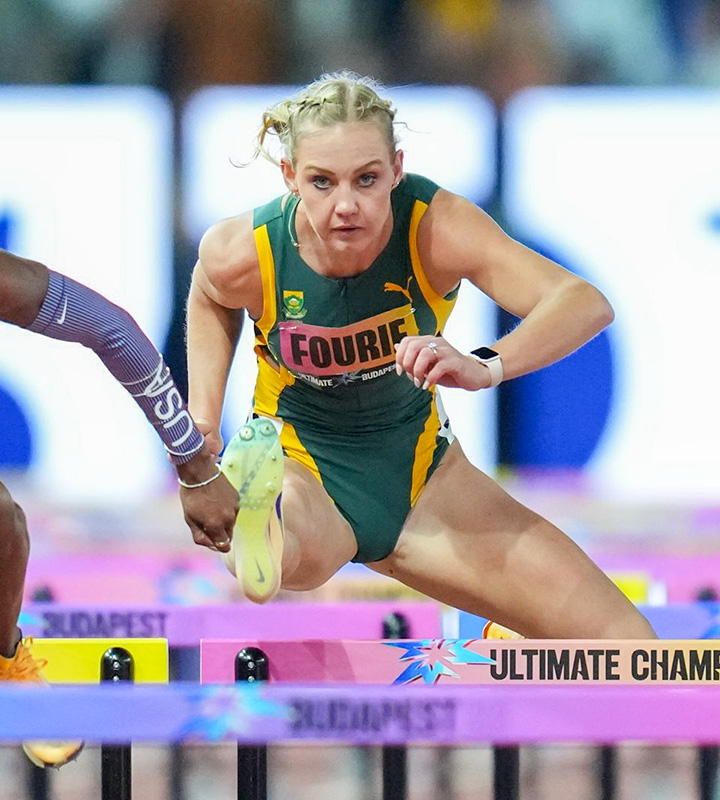
Marione Fourie ran 12.84 for sixth in her 100m hurdles semi-final, and Prudence Sekgodiso placed sixth in her 800m semi-final in 1:59.66 after a stumble in the chase for the line, both a round short of the medal races in fields that admitted only the top four.
World Athletics President Sebastian Coe said the championship was “watched by full crowds and audiences across the globe”. Two days after it closed, in the same city, the World Athletics Council made a decision that shows where all this counting leads.
On Tuesday, 15 September, the Council awarded the 2029 World Athletics Championships to Nairobi, the first time the sport’s flagship event will be held in Africa, ahead of bids from London, Rome and Munich. Munich will host the 2031 edition, after Beijing in 2027. World Athletics set out the case in the language of audience: its own fan research found that 68 percent of Kenyans surveyed rated their interest in athletics as high, against a global average of 39 percent, making Kenya the most athletics-interested market it has measured. Coe said “Nairobi has demonstrated emphatically that this is their moment.”
The venue will be the renovated Kasarani Stadium. Nairobi matters in South Africa this month for another reason, because the Kasarani Indoor Arena in the same city hosts the Africa Netball Cup from 19 to 26 September, the continent’s qualifier for the Netball World Cup Sydney 2027. The Spar Proteas arrive as defending champions in what Africa Netball describes as the continent’s most popular women’s sport, and they arrive with backing that includes Telkom as associate sponsor to Netball SA and the national team. The question this winter answered, who is watching and who is paying to be seen, will be asked in Nairobi in real time.
Which brings the argument home. Nielsen Sports South Africa, in releasing its Women’s Sport Landscape Report, describes the local market in one line: “Women’s sport in South Africa has hit a fandom breakthrough: 96.8% of South Africans now recognise Banyana Banyana, up from 87.5% & 22.3 million unique viewers tuned in to locally relevant women’s sport”. The report’s summary adds that awareness of the Women’s Rugby World Cup grew 44 percent between July 2024 and March 2026, and that 72 percent of those aware of the Pick n Pay Women’s Super League express interest in it.
Olympic Return Target as Banyana Banyana Prepare for Madagascar
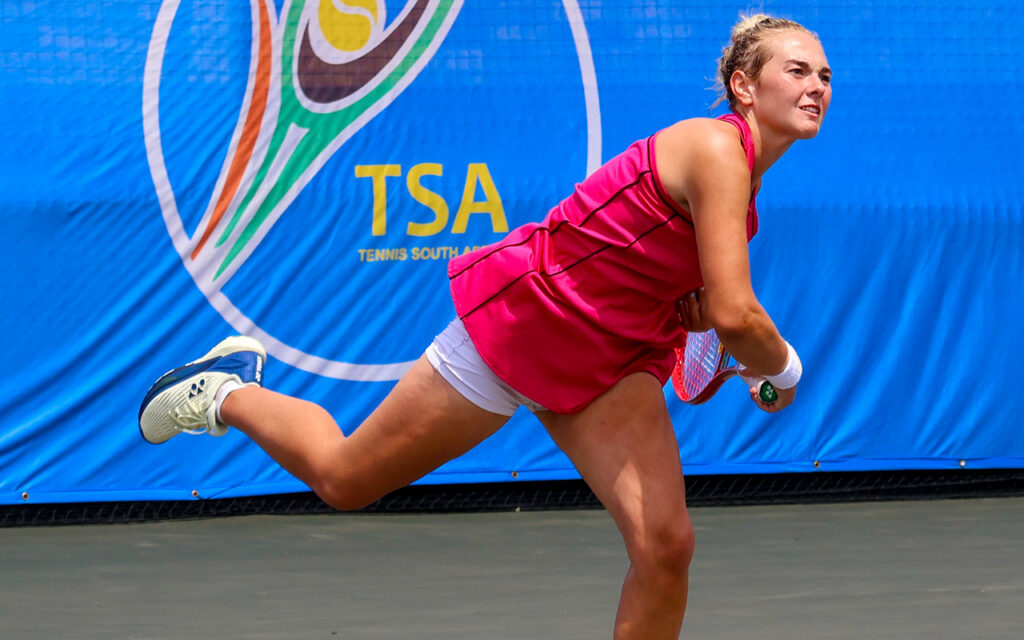
Abigayel Vosloo Claims Women’s Open Crown at Amex Tshwane Super 8
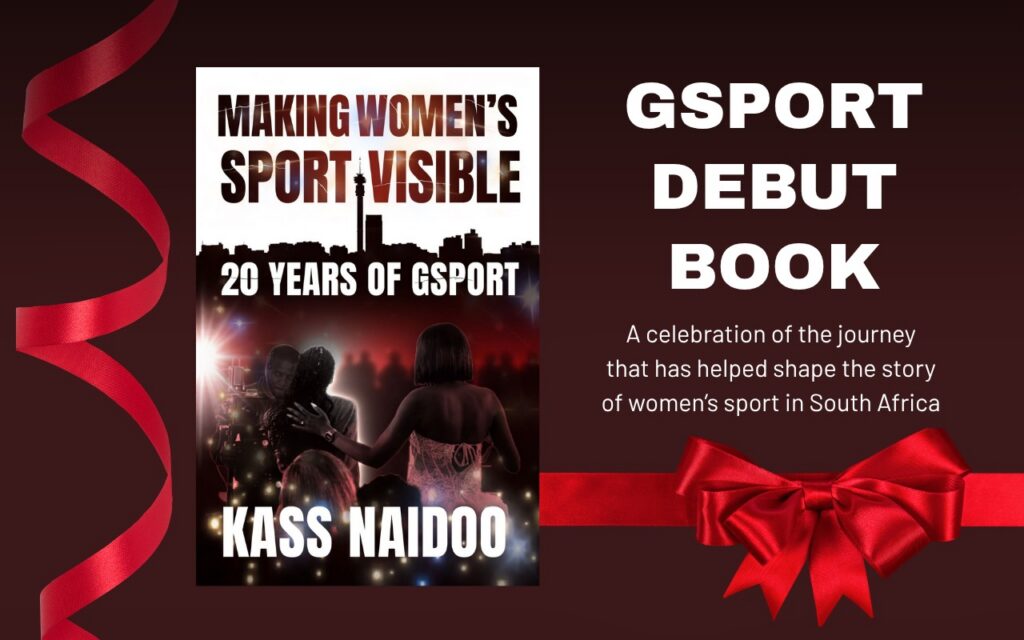
Kass Naidoo Announces Debut Book Celebrating 20 Years of gsport

Tayla Kavanagh Breaks South African 10km Record in Romania
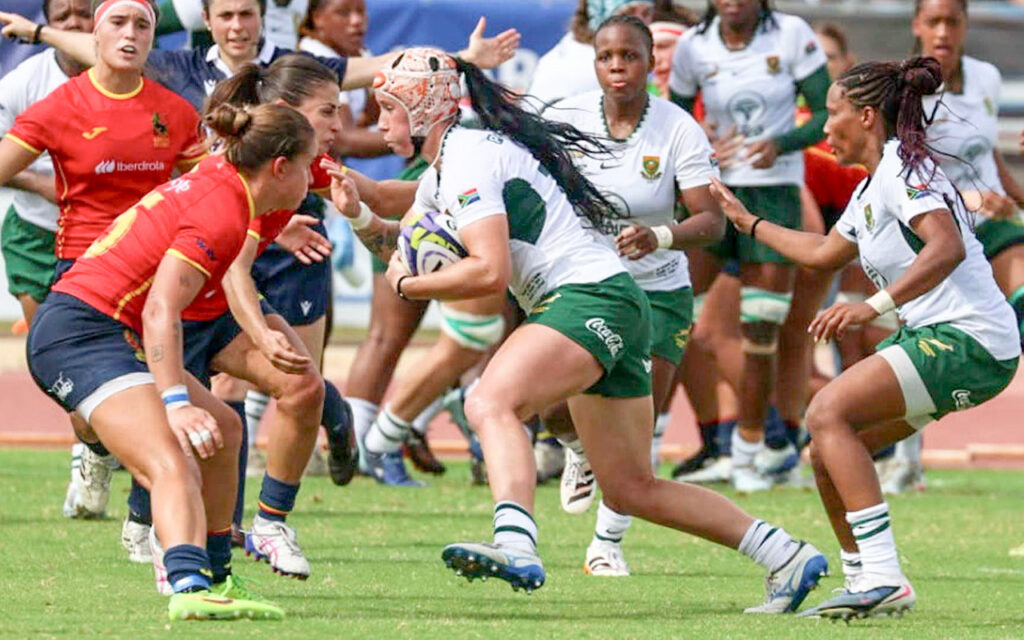
Springbok Women End European Tour With Clean Sheet in Seville

Glenrose Xaba Wins Jozi 10km to Claim Record Fourth Grand Prix
Nielsen’s framing of what comes next is the point of this piece. The report identifies commercial white space, its term for the areas where audience and fan momentum may be running ahead of commercial development. Samantha Lamberti, Head of International at Nielsen Sports, said of women’s football last year that “we’re no longer just tracking progress, we’re witnessing a breakthrough”. The South African numbers say the same about a wider set of sports, and they say it to rights holders, broadcasters and brands who now hold the data.
gsport has spent twenty years building the audience these reports now count. The cricketers who filled The Oval, the hockey players who kept fighting in Amstelveen, the hurdler and the 800m runner who lined up in Budapest and the netballers bound for Nairobi have done the counting for everyone. The numbers are the argument, and the argument is over. What remains is for the market to pay.
Main Photo Caption: Record crowds at the T20 World Cup, record reach at the Hockey World Cup, a sold-out Budapest and Nairobi 29. Women’s sport did the counting this winter. Now the Spar Proteas take the argument to Nairobi. We take a look at the unmistable case for media coverage of women in sport. Photo: Commonwealth Games Glasgow
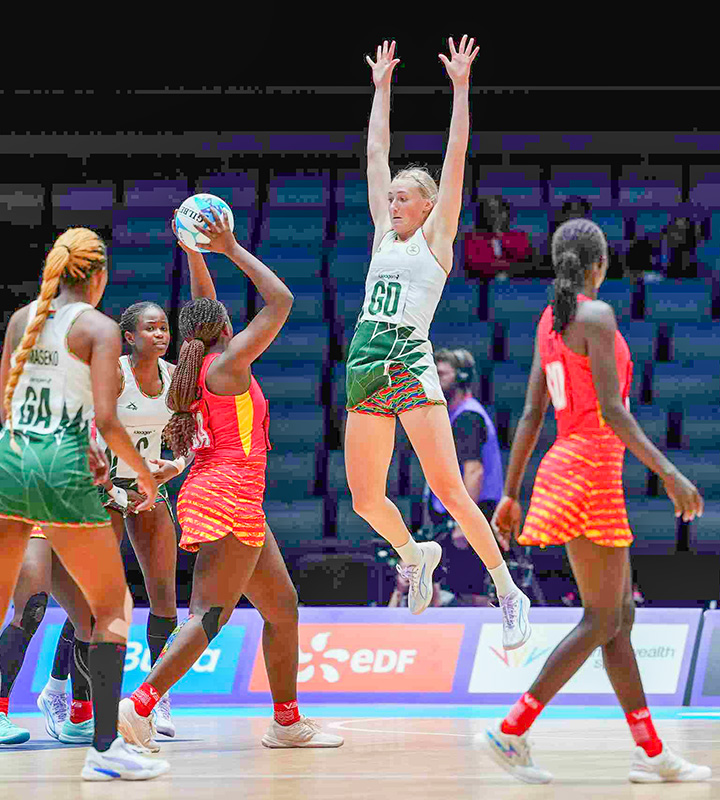
Photo 2 Caption: Sanmarie Visser flies high during Team South Africa’s match against Uganda at the 2026 Commonweatlh Games Glasgow Photo: Nic Bothma
Photo 3 Caption: South Africa at the FIH Hockey World Cup, the most watched hockey tournament ever staged, in Netherlands during August 2026. Photo: FIH / World Sport Pics
Photo 4 Caption: Marione Fourie at the inaugural World Athletics Ultimate Championship, which sold out all three sessions and reached more than 170 countries. Photo: Nic Bothma

 (0 rating, 0 votes, rated)
 Loading...

